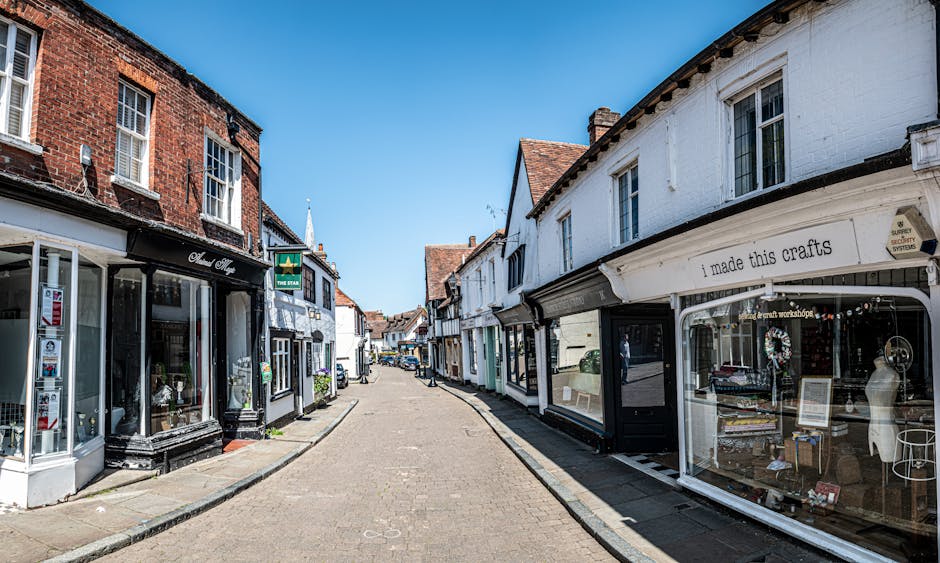
Ruislip High Street removals guide for narrow access
If you are planning a move on Ruislip High Street, narrow access can turn a straightforward relocation into a bit of a logistical puzzle. Parked cars, tighter pavements, awkward loading points, and the simple reality of trying to manoeuvre furniture through a busy high street all add up. The good news? With the right preparation, a calm approach, and the right type of removal support, a tight-access move can still run smoothly. This guide to Ruislip High Street removals guide for narrow access walks you through what matters, how to prepare, what to avoid, and how to make the day feel far less stressful than it first looks.
In our experience, the difference between a messy move and a neat one is usually found in the details: measuring the entrance, checking parking, choosing the right vehicle, and packing so the team can move quickly once they arrive. Let's get into the practical stuff.
Why Ruislip High Street removals guide for narrow access Matters
High streets are rarely built with modern removals in mind. Ruislip High Street is a lived-in, active local road, which means access can be tight at the exact moments you need space most. A van that looks perfectly manageable on paper can suddenly feel huge when it is trying to align with a narrow kerbside spot, a row of parked cars, and a doorway that sits just a little too close to the pavement. Not dramatic. Just inconvenient.
Narrow access matters because it affects almost every stage of the move:
- how close the vehicle can stop to the property
- how far items need to be carried
- whether larger furniture can be taken out safely
- how long the loading and unloading process takes
- what type of van or crew size is most suitable
If these details are ignored, you can end up with unnecessary delay, extra handling, or that awful moment where a sofa is half-way through a doorway and nobody wants to be the one to say, "erm, it may need to go back in." Better to plan ahead.
There is also a customer-experience side to this. Narrow access moves feel less stressful when everything is clear in advance. If you know where the van will wait, who will hold parking space, and how the contents will be staged, the whole day feels more controlled. For many people, especially if they are moving from a flat, a shop unit, or a small office, that reassurance is worth a lot.
Expert summary: For narrow-access removals on busy local streets, success usually comes from three things: accurate pre-move assessment, the right vehicle size, and disciplined packing. Those three together save time, protect belongings, and reduce avoidable friction on the day.
How Ruislip High Street removals guide for narrow access Works
A narrow-access move is not a special category of magic. It is simply a move that requires better planning because the space is limited. The process usually starts before moving day, often with a quick visual assessment, photographs, or a conversation about entry points, stairs, lift access, parking restrictions, and any items that may be awkward to turn around corners.
Then the move is shaped around that information. A smaller vehicle may be more suitable than a large truck. A man and van or removal van can be the practical choice when space is tight, while more complex or larger jobs may still need a bigger team or a different vehicle arrangement. The point is not to force one method into every scenario. The point is to match the method to the street.
On the day, the crew will usually aim to reduce carry distance, protect walls and door frames, and load the vehicle in a sequence that makes sense for the route and the access constraints. If the street is busy, timing matters too. A half-hour difference can change everything. Sounds small, but it often isn't.
For a more structured move, you might also consider support such as packing and boxes or packing and unpacking services, especially if items need to be carried through a narrow hallway or down a tight staircase. The better the packing, the easier the lifting. Simple as that.
Key Benefits and Practical Advantages
When narrow access is handled properly, the move becomes noticeably easier. You may not eliminate every challenge, but you reduce the pressure on every part of the day.
- Less risk of damage: careful planning reduces bumps, scuffs, and strained lifting.
- Faster loading and unloading: shorter carry routes and better positioning save time.
- Better use of vehicle space: the right van size means fewer wasted trips and less reshuffling.
- Lower stress for everyone: you are not improvising on the pavement while traffic queues behind you.
- More reliable scheduling: a move that has been assessed properly is easier to time.
There is also a less obvious benefit: narrow-access planning helps you decide what genuinely needs to move now and what can wait. For example, if you have bulky furniture that will be awkward to turn through a tight entrance, it may make more sense to use storage temporarily rather than squeeze everything in on one exhausting day.
That kind of decision can take a lot of the pressure off. Especially if you are balancing work, family, or a completion deadline that already feels a bit too close for comfort.
Who This Is For and When It Makes Sense
This guide is for anyone moving in or around Ruislip High Street where access is not generous. That can include:
- flat movers dealing with stairwells, shared entrances, or limited frontage
- homeowners on a street with tight parking and frequent passing traffic
- small businesses relocating stock, desks, or equipment
- students moving into or out of compact accommodation
- people needing one-off collection or a smaller moving load
It also makes sense if you are moving anything awkward, even if the overall job is not huge. A piano, heavy wardrobe, display unit, or fragile office item can be tricky when the access is tight. In those cases, a service such as piano removals or furniture removals may be more appropriate than a general loading plan.
If your move is small, quick, or slightly unpredictable, a flexible option like same-day removals may also be relevant. Not every move needs a grand operation. Sometimes you just need the right vehicle, the right timing, and someone who knows how to get in and out cleanly.
Step-by-Step Guidance
Here is a practical way to approach a narrow-access move on or near Ruislip High Street.
- Measure the access properly. Check doorway widths, stair turns, hallway corners, and any height restrictions. Do not rely on memory. Memory is a terrible survey tool.
- Assess the street environment. Note where vehicles can pause, how busy the road gets, and whether nearby parking is likely to interfere with loading.
- Choose the right moving format. A smaller vehicle, a two-person team, or a more specialist arrangement may be more suitable than a larger truck.
- Declutter before moving day. The less you move, the less you carry through tight spaces. It really is that simple.
- Pack for carry efficiency. Use strong boxes, label them clearly, and avoid overfilling. A box that is too heavy becomes awkward in a narrow corridor very quickly.
- Prepare a loading route inside the property. Remove obstacles, secure pets, and keep entrances clear.
- Plan parking in advance. If you are using a formal parking arrangement or permit process, do it early so the team is not circling around looking for space.
- Protect the property. Cover flooring, keep doorways clear, and make sure there is enough space to turn corners without scraping walls.
- Load in a sensible order. Start with the bulky items only if they can exit safely. Fragile items should not be trapped behind heavy furniture.
- Allow a little breathing room. Narrow-access moves often take longer than standard moves. Build that into your day so you are not rushing.
A good move often looks a bit boring from the outside. That is a compliment. It means everything is organised and nobody is panicking on the pavement.
Expert Tips for Better Results
If you want a narrow-access move to feel smooth rather than scrappy, the following tips make a real difference.
- Send photos before the move. A few clear images of the entrance, stairs, and street can help the mover judge access more accurately.
- Think in routes, not just rooms. Ask yourself how a sofa, mattress, desk, or fridge will actually travel out of the property.
- Break down what you can. Remove table legs, lampshades, detachable shelves, or bed frames before moving day.
- Use colour labels or room labels. It saves time when boxes are being carried through a tight space and stacked quickly at the other end.
- Keep first-use items separate. A small bag with chargers, documents, kettle items, and toiletries saves a lot of rummaging later.
- Choose packaging with grip. Smooth, over-taped, or flimsy boxes are harder to manage when space is limited.
- Make one person the decision-maker. It avoids those awkward moments where three people all have opinions and no one wants to say which direction the wardrobe should go.
If the move is commercial, the same principles still apply, but the stakes can feel a little higher because time affects trading. In that scenario, office removals or commercial moves can be more efficient when they are planned around access limitations from the start.
Common Mistakes to Avoid
Most problems in narrow-access moves come from assumption. People assume a van will fit. They assume the sofa will turn. They assume parking will be fine because "it usually is." That kind of optimism can be expensive.
- Underestimating vehicle size: bigger is not always better. On a tight high street, a smaller van may actually be smarter.
- Failing to check the final few metres: a move can look easy until the last doorway or corner.
- Not reserving time for access issues: if a bin lorry, delivery vehicle, or loading conflict appears, you need slack in the schedule.
- Leaving awkward items assembled: if something can be safely dismantled, do it before the move.
- Poor box labelling: it slows unloading and creates confusion when everything is stacked tightly.
- Ignoring property protection: scratched paint and chipped plaster are common avoidable annoyances.
Truth be told, the most common mistake is trying to make moving day do all the planning work. Better to do the planning work the day before, while the kettle is on and the pressure is still low.
Tools, Resources and Recommendations
You do not need a van-full of gadgets to manage a narrow-access move, but a few basic tools help enormously.
- Tape measure: useful for checking furniture and entry points.
- Furniture blankets: good for protecting both the item and the walls.
- Straps and ties: help secure loads in transit and reduce shifting.
- Bubble wrap or paper wrap: helpful for fragile items and awkward corners.
- Markers and labels: speed up unloading and room placement.
- Floor protection: especially useful in older properties or shared entrances.
For support with the physical moving side, it may help to look at removal services, man with a van, or removal truck hire depending on the scale of the job. If you need a quick response with a lighter load, removal van can be a better fit than a larger vehicle. For smaller household jobs, home moves and flat removals are often the most relevant service types to compare.
If sustainability matters to you, it is also worth checking how unwanted items will be handled. A local move can be a good time to reduce waste, reuse what you can, and think sensibly about disposal. The recycling and sustainability approach on a move is often overlooked, but it is a very practical part of the process.
Law, Compliance, Standards or Best Practice
For a narrow-access move, compliance is mostly about doing the ordinary things properly and safely. You are not usually dealing with exotic rules, but you are still dealing with real responsibilities around access, parking, safety, and handling heavy items.
In the UK, best practice for removals generally means:
- planning parking and loading in a way that does not create unnecessary obstruction
- using suitable lifting methods and enough people for heavy or awkward items
- protecting property and personal belongings during handling
- communicating access issues clearly in advance
- checking insurance and safety arrangements before the move begins
That last point matters more than many people realise. If you are comparing providers, it is sensible to ask how the move is insured and what safety steps are in place. The pages on insurance and safety and health and safety policy are useful reference points when you want to understand how a company approaches these responsibilities.
Payment transparency and terms also matter. A move with access complications is easier to manage when pricing, payment, and expectations are clear from the start. That is where pricing and quotes, payment and security, and terms and conditions can help set the right tone before anyone lifts a box.
Options, Methods, or Comparison Table
Here is a simple way to compare common approaches for narrow-access removals.
| Method | Best for | Strengths | Trade-offs |
|---|---|---|---|
| Man and van | Smaller domestic moves, quick local jobs | Flexible, easier on tight streets, often efficient for short carry distances | May not suit very large loads or multiple bulky items |
| Removal van | Moderate-sized moves with access constraints | Good balance of capacity and manoeuvrability | Still needs careful parking and loading planning |
| Moving truck | Larger moves where capacity matters most | Can carry more in one trip | Can be harder to position on a narrow high street |
| Full removal service | Complex house or office moves | More hands, more coordination, useful for awkward items | Usually needs more planning and may be less nimble in very tight access |
If you are unsure which route is best, ask a simple question: what is the main bottleneck, capacity or access? If the bottleneck is access, a smaller vehicle and better handling usually wins. If the bottleneck is volume, then you may need a more comprehensive plan.
Case Study or Real-World Example
Here is a realistic example from the kind of move people often face around a busy high street. A couple were moving from a first-floor flat with a narrow staircase and limited kerbside space. They had a sofa, a bed frame, a few bookcases, and a stack of boxes. Nothing outrageous. But the entrance was tight enough that the sofa would not make the turn without removing the feet and tilting it carefully.
Before moving day, they measured the hallway, sent photos, and separated the furniture that needed dismantling. They also kept a clear route from front door to pavement, and they packed smaller items into uniform boxes so the load could be stacked quickly. The team used a smaller vehicle rather than a larger one, which meant the van could be positioned closer to the property without causing a mess of awkward reversing and repositioning.
The result was not glamorous, but it worked. No drama. No scrambling. The move took a little longer than a standard open-access property, but the pace stayed controlled, and the couple avoided the usual "why did we leave this until today?" moment. Happens all the time, honestly.
The lesson is simple: narrow access does not have to mean difficult access. It just means you need the move to be designed around the site, not around hope.
Practical Checklist
Use this checklist before your Ruislip High Street move.
- Measure doors, hallways, stairs, and any awkward corners
- Check whether the van can stop close enough to the property
- Confirm parking arrangements and any loading restrictions
- Photograph the entrance, staircase, and street if needed
- Decide whether items should be dismantled in advance
- Pack boxes securely and label them clearly
- Set aside essentials for the first night
- Protect floors, walls, and door frames
- Separate fragile items from heavy ones
- Choose the most suitable vehicle size and service type
- Keep the route through the property clear
- Allow extra time for loading and unloading
- Check insurance, safety, and terms before the move
- Plan for storage if not everything is going straight in
If you tick most of those off, you are already ahead of the curve. And that does make a difference.
Conclusion
A narrow-access move on Ruislip High Street is manageable when the plan fits the street. That means measuring properly, choosing the right vehicle, packing with care, and thinking through parking and access before moving day arrives. It also means being realistic. Not every move is about brute force; a lot of it is about restraint, timing, and making smart choices early.
The best removals feel calm because the difficult parts were dealt with before the first box was lifted. If you take one thing from this guide, let it be this: tight access is not a problem to hope away, it is a detail to plan around.
Get a free quote today and see how much you can save.
When you are ready, the next step is simply to speak with a mover who understands local access issues and can match the job to the street, not the other way round. A bit of preparation goes a long way, and that's reassuring in itself.
Frequently Asked Questions
What counts as narrow access for a removal on Ruislip High Street?
Narrow access usually means the vehicle cannot stop directly beside the property, or the entrance route is tight enough that furniture needs careful manoeuvring. It can include narrow doors, sharp stair turns, restricted kerb space, or busy street conditions.
Is a man and van better than a larger removals vehicle for tight access?
Often, yes. For smaller or medium-sized moves, a more compact vehicle can be much easier to position safely on a busy high street. That said, the right choice depends on volume, furniture size, and how awkward the access route is.
How do I know if my sofa will fit through the doorway or staircase?
Measure the widest points of the furniture and compare them with the narrowest points of the route, including corners and stair turns. If you are unsure, send photos and measurements to the mover before the job. It saves a lot of guesswork.
Should I dismantle furniture before a narrow-access move?
If it can be dismantled safely, usually yes. Beds, tables, shelving, and some wardrobes are often easier to move when broken down. Just keep fittings, screws, and tools in a labelled bag so reassembly is not a faff later.
What if parking is difficult on moving day?
That is one of the most common issues, so plan for it early. Check whether there is any loading option nearby and share the street conditions with your mover in advance. Sometimes the solution is simply choosing a better time slot.
Can I use storage if everything cannot move in one go?
Absolutely. If access is tight or your new property is not ready for all items, storage can be a sensible bridge between locations. It is especially helpful for bulky furniture or items you do not need immediately.
How much longer does a narrow-access move take?
There is no fixed rule, because every street and property is different. But a move with restricted access usually takes longer than one with easy parking and a direct carry route. The main variables are walking distance, stairs, vehicle positioning, and how much dismantling is needed.
Are flat removals a better fit for Ruislip High Street properties?
For many apartments and smaller homes, yes. A flat removals service is often better suited to shared entrances, stairs, and tighter internal layouts than a standard large-house approach.
What should I ask a removal company before booking?
Ask how they handle narrow access, what vehicle they recommend, whether they need measurements or photos, how they deal with parking, and what insurance or safety arrangements are in place. Clear questions get clearer answers.
Do I need to prepare anything for a quick or same-day move?
Yes. If time is limited, focus on essentials: clear access, packed boxes, labelled fragile items, and any furniture that can be dismantled quickly. A same-day removals job only feels fast when the property is ready to be loaded.
What if I only have a few items to move?
For a small load, a lighter service such as furniture pick up or a compact van arrangement may be enough. Small moves still need planning on narrow streets, but they are usually easier to manage.
Can I combine home moving and furniture disposal in one trip?
Sometimes you can, but it depends on what the mover offers and what is safe and practical on the day. If you are clearing out items you no longer want, it may be worth separating them from the main move so loading stays efficient.
Is this type of move suitable for office relocations too?
Yes. Offices on or near busy high streets often face the same access limitations as homes, sometimes more so. The planning principles are identical: measure access, prepare the route, and choose the right vehicle and crew for the job.
What is the single best way to reduce stress on moving day?
Prepare the access route in advance and keep communication simple. When the mover knows exactly what they are dealing with, the day feels calmer. Strange how a few measurements and a couple of photos can do that, but they really can.